

Top 10 Cryptocurrencies to Watch in 2026: Expert Predictions and Growth Potential
Key Takeaways
- The top 10 cryptocurrencies to watch in 2026 represent a strategic mix of established leaders and high-growth potential platforms, with experts forecasting continued institutional adoption and mainstream finance integration.
- Bitcoin (BTC), Ethereum (ETH), and Solana (SOL) remain core portfolio anchors due to network effects, scalability upgrades, and their roles as digital gold and smart contract platforms.
- Fast-growing ecosystems like Avalanche (AVAX), Cardano (ADA), and TON (Toncoin) offer targeted exposure to DeFi growth, gaming, and emerging market use cases.
- Infrastructure plays including Chainlink (LINK) and Polygon (MATIC) are critical for cross-chain data feeds, decentralized exchanges, and Ethereum scaling solutions.
- Crypto investing in 2026 still carries substantial risk—diversification, regulatory awareness (MiCA in Europe, clarity act discussions in the US), and long-term focus remain essential for success.
The crypto market continues to evolve at breakneck speed, and 2026 is shaping up to be a pivotal year for digital assets. Whether you’re a seasoned crypto investor or just starting to explore blockchain technology, understanding which cryptocurrencies have the strongest growth potential can make a significant difference in your portfolio performance. In this comprehensive guide, we’ll break down expert predictions for the top 10 crypto assets worth watching, explain why each matters, and provide practical guidance for navigating the risks ahead.
Expert Overview: Why These 10 Cryptos Matter in 2026
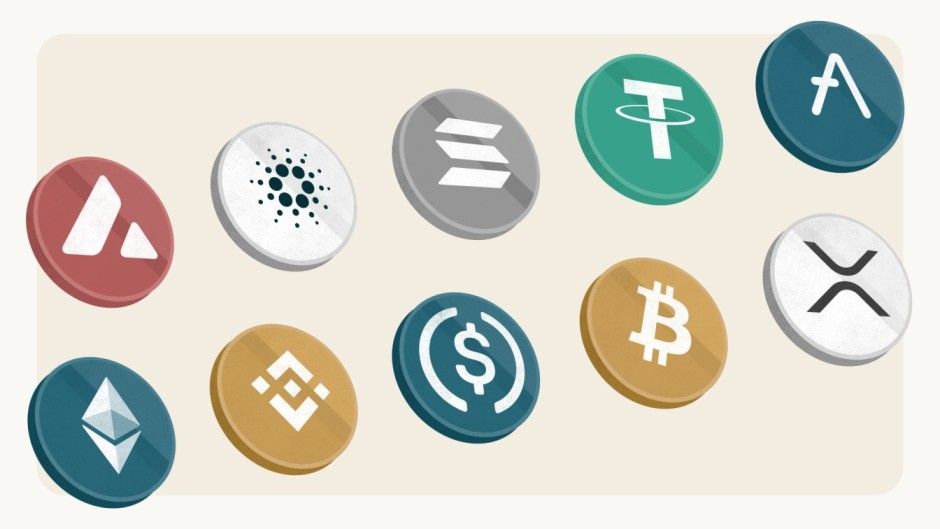
Before diving into the details, let’s establish which top 10 cryptocurrencies to watch in 2026 we’ll be analyzing and why they made this list based on expert consensus.
The 10 Assets Covered in This Article:
| Rank | Cryptocurrency | Primary Use Case |
|---|---|---|
| 1 | Bitcoin (BTC) | Store of value, digital gold |
| 2 | Ethereum (ETH) | Smart contracts, DeFi, NFTs |
| 3 | Solana (SOL) | High-speed DeFi, gaming, AI dApps |
| 4 | BNB (BNB) | Exchange utility, BNB Chain ecosystem |
| 5 | Cardano (ADA) | Research-driven smart contracts |
| 6 | Avalanche (AVAX) | Customizable subnets, enterprise solutions |
| 7 | Toncoin (TON) | Telegram-integrated payments |
| 8 | Chainlink (LINK) | Decentralized oracle network |
| 9 | Polygon (MATIC) | Ethereum layer-2 scaling |
| 10 | XRP (XRP) | Cross border payments |
These selections are based on several key factors that experts consistently evaluate:
- Network usage data and on chain transaction volumes
- Developer activity measured through GitHub commits and ecosystem growth
- Institutional interest from ETF inflows, corporate treasuries, and institutional partnerships
- Regulatory trajectory and clarity in major markets
The goal is to identify crypto projects with real utility, strong ecosystems, and the resilience to survive market volatility.
Why Crypto Still Has Big Upside in 2026
The crypto markets entering 2026 build on the volatile yet record-breaking performance of previous years. Bitcoin, Ethereum, and other major assets achieved all-time highs during the 2024-2025 crypto bull run before retreating, setting the stage for what many experts predict will be a more mature, institutionally-driven growth phase.
Macro Trends Driving Growth
Several powerful forces are converging to support digital assets in 2026:
Institutional Adoption Accelerates
- Spot Bitcoin ETFs launched in 2024 amassed over $60 billion in assets under management
- Corporate treasuries continue allocating to Bitcoin and Ethereum
- Institutional capital from pension funds and asset managers enters through regulated vehicles
Tokenized Assets Expand
- Securities tokenization reached significant milestones with platforms like BlackRock’s BUIDL fund
- Boston Consulting Group estimates $10 trillion in tokenized real world assets by 2030
- Traditional finance increasingly bridges into blockchain technology infrastructure
Regulatory Progress Creates Clarity
- Europe’s MiCA framework mandates 1:1 reserves for stablecoins and establishes clear rules
- The securities and exchange commission continues defining boundaries for crypto assets
- Strategic Bitcoin reserve discussions in the US signal potential mainstream adoption at the government level
Technology Catalysts
Beyond regulatory clarity, significant momentum comes from technology improvements:
- Ethereum’s ongoing upgrades reduce high gas fees and increase throughput
- Bitcoin layer-2 solutions expand use cases beyond simple transfers
- AI-integrated dApps emerge on fast networks like Solana and Avalanche
Despite volatility, blue-chip cryptos with real utility and strong ecosystems have higher likelihood of long-term survival and growth potential.
Bitcoin (BTC): Institutional Anchor and Store of Value
Bitcoin btc remains the anchor of virtually everything in crypto portfolios for 2026. The post-2024 halving dynamics continue to shape supply and demand fundamentals in ways that favor long term holders.
Core Investment Thesis
Bitcoin’s value proposition rests on several pillars:
- Fixed 21 million supply cap creating programmatic scarcity
- Digital gold narrative increasingly adopted by institutional investors
- Market dominance hovering above 55% of total crypto market capitalization
The April 2024 halving reduced mining rewards to 3.125 BTC per block. Historically, prices surge 12-18 months post-halving, and many experts predict this four year cycle pattern may evolve into a “supercycle” where adoption decouples from traditional patterns due to sustained institutional demand.
Institutional Demand Metrics
According to Bitwise Investments, ETFs are projected to absorb over 100% of new Bitcoin supply (roughly 164,250 BTC annually post-halving), creating a supply squeeze as net inflows exceed new issuance.
MicroStrategy alone holds 250,000+ BTC in its treasury, normalizing corporate crypto allocation and attracting mainstream finance attention.
Growth Potential and Risks
| Factor | Assessment |
|---|---|
| Upside potential | Moderate (relative to small caps) |
| Risk level | Lower than altcoins |
| Liquidity | Highest in crypto |
| Volatility trend | Declining (approaching traditional assets) |
Bitcoin’s volatility, measured by 90-day realized volatility, is declining from over 80% in 2017 to around 40-50% in recent years—a reflection of institutional money stabilizing price action.
Ethereum (ETH): DeFi, NFTs, and the Layer-2 Economy
Ethereum eth serves as the leading smart contract platform and backbone of decentralized finance and NFTs in 2026. Its journey from a few dollars in 2015 to thousands demonstrates the power of developer ecosystem dominance.
The Smart Contract Pioneer
Ethereum powers:
- Over $100 billion in DeFi total value locked
- The vast majority of NFT infrastructure through ERC-20/721 standards
- Thousands of defi protocols and decentralized applications
The transition to proof of stake via The Merge in 2022 slashed energy use by 99.95%, addressing environmental concerns and enabling deflationary issuance through EIP-1559’s fee burning mechanism.
Layer-2 Scaling Revolution
Even as many transactions move to layer-2 networks like Optimism and Arbitrum, ETH remains essential:
- Rollups and blob space create demand for ETH as “blockspace fuel”
- Layer-2s now process over 100 TPS aggregated, compared to Ethereum’s base layer of 15-30 TPS
- Future upgrades like danksharding will further reduce transaction fees
Growth Potential
Ethereum’s role as collateral and base digital money in the on-chain financial system positions it for continued growth. Institutional DeFi, tokenized securities, and staking ETFs could drive significant demand if the clarity act passes in the US.
Solana (SOL): High-Speed Platform for DeFi, Gaming, and AI
Solana sol has earned its reputation as a “speed demon” capable of processing over 2,000 transactions per second at sub-cent fees—a stark contrast to Ethereum’s base layer limitations.
Technical Architecture
Solana’s hybrid consensus combines:
- Proof of stake for security and staking rewards
- Proof-of-History for transaction ordering and sub-400ms finality
- Gulf Stream mempool-less forwarding and Turbine block propagation
This architecture enables high-throughput use cases like gaming, high-frequency trading, and consumer applications that would be cost-prohibitive on slower networks.
Ecosystem Growth
The Solana ecosystem has expanded dramatically:
- Captured 70% of DEX volume in 2025 during meme coins frenzies
- Hosts emerging AI-driven dApps rewarding on chain activity
- Attracts NFT marketplaces and defi platforms seeking low fees
Risks and Considerations
Despite its speed advantages, Solana faces centralization concerns:
- Top 19 validators control 33% of stake (compared to Ethereum’s 1 million+ validators)
- Network outages have occurred, including a 17-hour downtime in February 2024
- Competition from other fast layer-1s and Ethereum layer-2s intensifies
The growth potential remains strong for investors with appropriate risk tolerance who believe speed and low cost will drive mainstream adoption.
BNB (BNB): Core Asset of the Binance Ecosystem
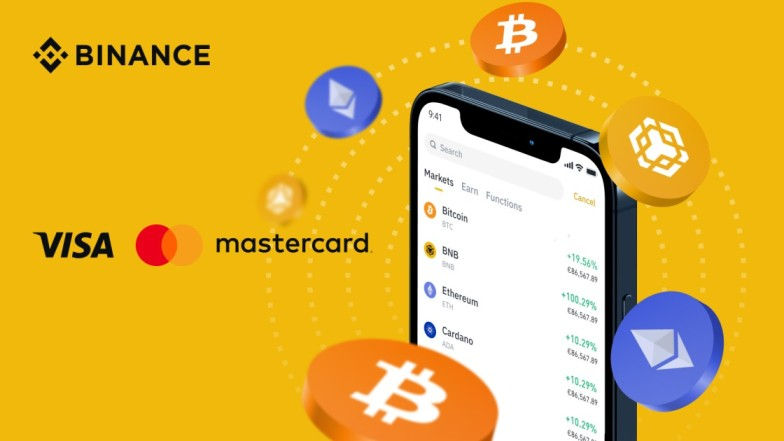
BNB functions as the utility and governance token powering the world’s largest centralized exchanges ecosystem and a sprawling network of decentralized applications on BNB Smart Chain.
Use Cases and Utility
BNB serves multiple functions:
- Trading fee discounts on Binance centralized exchange
- Transaction fees on BNB Chain for defi platforms and dApps
- Launchpad participation for new token offerings
- DeFi lending and staking across the ecosystem
Tokenomics
Binance conducts regular token burns that reduce BNB’s circulating supply, creating deflationary pressure. This mechanism has contributed to price appreciation from cents in 2017 to hundreds of dollars by 2026.
2026 Outlook
| Strength | Risk |
|---|---|
| Strong on-chain activity | Regulatory scrutiny around centralized exchanges |
| Dominant exchange market share | Centralized nature of governance |
| Extensive DeFi ecosystem | Competition from decentralized alternatives |
Cardano (ADA): Research-Driven and Eco-Friendly Smart Contracts
Cardano ada represents a methodical, academically-driven approach to blockchain development. Its emphasis on formal research and peer-reviewed development appeals to investors who value long-term sustainability over rapid experimentation.
Development Philosophy
Cardano’s unique approach includes:
- Formal verification methods for smart contracts
- Peer-reviewed academic research before implementation
- Founder Gavin Wood’s influence on early development (note: Cardano was founded by Charles Hoskinson, who was also an Ethereum co founder)
- Focus on sustainability and low energy consumption
Real-World Applications
Cardano targets practical use cases:
- Identity and credential systems in regions like Africa
- Hydra scaling solution targeting high throughput for enterprise use
- On-chain governance tools for decentralized decision-making
Growth Potential in 2026
ADA’s price has shown volatile but significant growth from roughly $0.02 in 2017. As more DeFi projects, NFTs, and governance tools launch on Cardano, growth potential expands for many projects building in the ecosystem.
Avalanche (AVAX): Customizable High-Performance Networks
Avalanche distinguishes itself through subnets—customizable blockchains that allow institutions, gaming studios, and DeFi projects to launch their own networks with tailored parameters.
Key Technical Features
- Sub-second finality for rapid transaction confirmation
- Low fees suitable for trading, gaming, and enterprise solutions
- Subnet architecture enabling regulatory-compliant environments
Institutional Appeal
Avalanche’s architecture makes it attractive for:
- Tokenized securities requiring specific compliance features
- Gaming studios needing high throughput without network congestion
- Enterprises wanting private or permissioned environments
2026 Growth Potential
Strong DeFi TVL and cross-chain bridging activity position Avalanche well, though competition from Ethereum rollups and other modular chains presents ongoing challenges.
Toncoin (TON): Tapping Telegram’s Massive User Base
Toncoin’s unique value proposition connects directly to Telegram’s audience of over 900 million monthly active users—a distribution advantage few crypto projects can match.
Integration with Telegram
TON is designed for:
- Fast, low fee payments within Telegram chats
- Integrated mini-apps accessible directly in conversations
- On-chain services reaching emerging market users
Growth Catalysts
2024-2026 developments include:
- Telegram-native wallets reducing friction for crypto adoption
- TON-based games attracting new users to digital assets
- P2P payment use cases for fiat currencies alternatives in emerging markets
If even 5% of Telegram’s user base adopts Toncoin for everyday transactions, the demand implications are massive.
Risks
Regulatory attention to messaging/finance integration and competition from other mobile-first crypto payment solutions represent key concerns.
Chainlink (LINK): Essential Data Layer for Smart Contracts
Chainlink serves as the leading decentralized oracle network, feeding real world data into blockchains—a critical infrastructure role that underpins virtually everything in DeFi.
Why Oracles Matter
Smart contracts need reliable external data for:
- Price feeds for lending protocols and derivatives
- Proof of reserves for stablecoin verification successful waiting for confirmation
- Insurance triggers based on real-world events
- Cross-chain communication through the Cross-Chain Interoperability Protocol (CCIP)
Market Position
Chainlink oracles have secured over $75 billion in DeFi value at peak periods. This infrastructure importance may make LINK undervalued relative to the critical role it plays.
2026 Outlook
Emerging products like CCIP and proof of reserves drive new demand, though LINK’s performance depends on broader defi ecosystem growth and on chain activity expansion.
Polygon (MATIC): Scaling Ethereum for the Masses
Polygon provides a leading Ethereum scaling ecosystem through sidechains, zk-rollups, and other layer-2 solutions that enable cheaper, faster transactions while inheriting Ethereum’s security.
Adoption Metrics
MATIC gained widespread use for:
- NFT drops from major brands and artists
- Web3 gaming requiring low transaction fees
- Enterprise pilots with major corporations
Technical Evolution
Polygon continues developing advanced zk-technology while maintaining MATIC’s role and liquidity profile:
- Lower gas fees than Ethereum mainnet
- Higher throughput for consumer-facing dApps
- Strong developer tools and ecosystem support
Growth Potential
As Ethereum adoption expands and mainstream brands experiment with on-chain loyalty programs, tickets, and collectibles, Polygon stands to benefit from increased activity.
XRP (XRP): Cross-Border Payments and Banking Rails
XRP enables near-instant, low cost cross border payments for banks and payment providers—a use case that addresses real inefficiencies in traditional finance infrastructure.
Technical Specifications
| Metric | XRP | Traditional SWIFT |
|---|---|---|
| Transaction speed | 3-5 seconds | Days |
| Throughput | 1,500 TPS | Variable |
| Annual settlement volume | $70 billion+ | Trillions |
Regulatory Progress
Ripple’s network of more than 300 financial institutions has grown following partial regulatory clarity through legal victories in the mid-2020s. On-demand liquidity solutions and remittance provider partnerships could drive transactional demand.
Risks
- Centralization concerns around validator distribution
- Remaining regulatory questions in some jurisdictions
- Competition from stablecoins and central bank digital currencies
How Experts Pick Cryptos to Watch in 2026
Understanding expert methodology helps you apply similar frameworks when evaluating crypto projects beyond this top 10 list.
Fundamental Factors
Experts look for:
- Clear use case (payments, DeFi, infrastructure, gaming)
- Strong developer community measured through GitHub activity
- Active user growth reflected in daily transactions and unique addresses
- Sustainable tokenomics with reasonable supply schedules
Quantitative Metrics
| Metric | What Experts Look For |
|---|---|
| Market cap | $5B+ for relative stability |
| Liquidity | High 24-hour trading volume |
| Momentum | Positive 7-day/30-day price trends |
| Open interest | Growing derivatives activity |
Qualitative Checks
- Team credibility and past performance on roadmap delivery
- Security track record (avoiding projects with past exploits)
- Quality of institutional partnerships with banks, tech firms, and enterprises
Balance blue-chip assets like BTC and ETH with limited allocation to higher-growth altcoins aligned with your risk tolerance.
Risks, Volatility, and Smart Investing Tips
All 10 highlighted cryptocurrencies remain high-risk investments, especially for short time horizons in 2026. This section provides practical guidance for managing that risk.
Key Risks to Monitor
- Price crashes of 50-80% can occur during market corrections
- Regulatory changes may restrict access or create compliance burdens
- Smart contract bugs have drained $1.7 billion across DeFi in single years
- Exchange hacks and bridge exploits continue threatening user funds
- Project execution failures affect many projects in the space
Practical Guidance
Do:
- Only invest money you can afford to lose
- Diversify across several of the highlighted blue-chip and infrastructure projects
- Use dollar-cost averaging rather than lump-sum timing
- Store long-term holdings in hardware wallets with secure backups
Don’t:
- Use leverage unless highly experienced
- Chase meme coins and speculative frenzy hype cycles
- Ignore due diligence on team backgrounds and security audits
- Neglect tax tracking and reporting obligations
Long-Term Strategy
- Regular contributions smooth out volatility impact
- Self-custody reduces counterparty risk from centralized exchanges
- Stay informed through reputable crypto research sources
- Monitor regulatory developments in your jurisdiction
Conclusion: Positioning Your Portfolio for 2026 and Beyond
The top 10 cryptocurrencies to watch in 2026 represent a balanced approach combining store of value assets, smart contract platforms, and critical infrastructure tokens. Each serves a distinct purpose in the evolving crypto industry landscape.
Portfolio Construction Principles:
- Bitcoin and Ethereum remain core holdings for most crypto investors seeking established, lower-risk exposure
- Solana, Avalanche, Cardano, TON, BNB, Polygon, Chainlink, and XRP offer targeted growth exposure to specific use cases
- Infrastructure plays like Chainlink and Polygon may be undervalued relative to their systemic importance
The importance of ongoing research cannot be overstated. Technology upgrades, regulatory developments, and adoption metrics will continue evolving beyond 2026. Markets change, and past performance does not guarantee future results.
Crypto could significantly boost long-term wealth for informed investors, but disciplined risk management remains essential. Start with established leaders, diversify thoughtfully, and never invest more than you can afford to lose.
This article does not constitute investment advice. Always conduct your own due diligence and consult qualified professionals before making investment decisions based on your individual investment goals.
Frequently Asked Questions (FAQ)
Q1: Which of the top 10 cryptocurrencies is safest to start with in 2026?
Bitcoin and Ethereum are generally considered the most established choices due to their size, liquidity, institutional adoption, and relative regulatory clarity. They have the longest track records and deepest liquidity among digital assets. However, “safe” is relative in crypto—even these leaders can experience 30-50% drawdowns during market corrections. Assess your personal risk tolerance and investment goals before allocating.
Q2: How much of my portfolio should I allocate to these 10 cryptos in 2026?
Many financial experts suggest a 5-10% total portfolio allocation to crypto for diversified investors, though this varies based on individual circumstances. Within that allocation, a common approach places 60-70% in BTC and ETH, with the remaining 30-40% spread across higher-risk altcoins. Younger investors with longer time horizons and higher risk tolerance may allocate more, while those near retirement typically allocate less.
Q3: Are there any up-and-coming coins beyond this top 10 to watch?
Emerging categories like AI tokens (e.g., Fetch.ai and similar projects merging with ASI for decentralized compute), DePIN (decentralized physical infrastructure networks), and gaming tokens could perform well in 2026-2027. Real world asset tokenization platforms also show promise. However, these smaller-cap projects carry significantly higher risk than the established top 10 covered in this article—many projects in these categories will fail, so position sizing should reflect that reality.
Q4: What is the best way to store my cryptocurrencies safely in 2026?
Use reputable centralized exchanges only for active trading, then move long-term holdings to hardware wallets (like Ledger or Trezor) or well-audited self-custody solutions. Enable two-factor authentication everywhere, use unique strong passwords, and maintain secure backups of seed phrases in multiple physical locations. Never share seed phrases digitally or store them in cloud services. Ray id and verification logs from exchanges should be saved for security and tax purposes.
Q5: How do taxes work on crypto gains in 2026?
Most countries treat crypto as a taxable asset with capital gains taxes on profits when you sell, trade, or spend cryptocurrency. Tax rates vary significantly—in the US, long-term capital gains (assets held over one year) are taxed at 0-20% depending on income, while short-term gains are taxed as ordinary income. Track all transactions carefully using portfolio tracking software, and consult a tax professional familiar with crypto in your jurisdiction. Staking rewards, airdrops, and DeFi yields may also trigger taxable events in many countries.