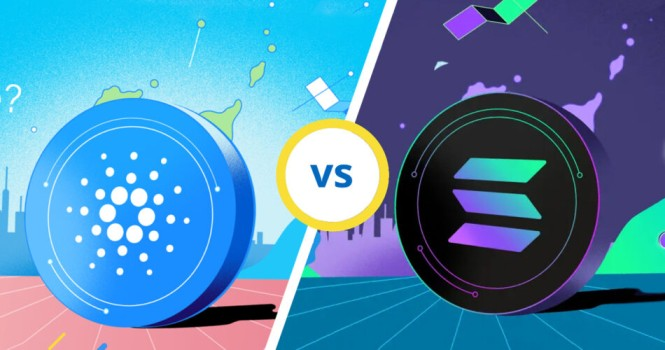
Solana vs Cardano 2026 Performance: Speed, Security, And Investor Outlook
The debate between Solana and Cardano has intensified as we move through 2026, with both blockchain ecosystems demonstrating distinct strengths that appeal to different types of crypto investors. Whether you prioritize raw speed and low fees or prefer a methodical approach to security and governance, understanding the real performance gap between SOL and ADA is essential for making informed decisions.
This guide breaks down the technical foundations, ecosystem maturity, market dynamics, and investment considerations that define solana vs cardano 2026 performance. By the end, you will have a clear framework for evaluating which chain aligns with your priorities and risk tolerance.
Solana vs Cardano: Quick 2026 Performance Snapshot
Looking at concrete data from early 2026, Solana maintains its position as the faster, more actively used network, while Cardano continues building on its research driven foundation with steady but slower ecosystem growth.
Here is how the two chains compare as of early 2026:
| Metric | Solana (SOL) | Cardano (ADA) |
|---|---|---|
| Price (Jan 2026) | $145.43 | $0.60 |
| Market Cap Ranking | Top 10 | ~$14.13B |
| DeFi Applications | 100+ | ~15 |
| Average Transaction Fee | $0.00025 | Higher than SOL |
| Validator Nodes | ~1,000 | 3,000+ |
| Real World TPS (tested) | 1,182 | 0.83 |
Solana continues leading in DeFi Total Value Locked, NFT transaction volumes, and daily active addresses compared with Cardano’s smaller but growing on chain metrics. Both assets remain highly volatile, with their 2026 trajectories closely linked to macro crypto market cycles, regulatory headlines, and network upgrade milestones.
The rest of this article unpacks the technical, ecosystem, and investment factors behind this performance gap.
Foundations: How Solana And Cardano Reached Their 2026 Position
Understanding the history of these platforms explains much about their current positioning and where they may head through 2026.
Solana launched its mainnet beta in 2020 with a singular focus: delivering web scale performance that could support consumer applications, high frequency trading, and DeFi protocols requiring sub second finality. The chain was built from the ground up to handle throughput that rivals traditional financial infrastructure.
Cardano took a fundamentally different path. Beginning with its Byron and Shelley eras, the platform established itself as an “academic blockchain” where every major upgrade receives peer reviewed research and formal verification before implementation. This commitment to scientific rigor created a reputation for security and careful development, even if it meant slower feature delivery.
| Aspect | Solana | Cardano |
|---|---|---|
| Launch Timeline | Mainnet beta 2020 | Byron era 2017, smart contracts 2021 |
| Design Philosophy | Speed first, iterate fast | Research first, verify thoroughly |
| Primary Focus | Consumer apps, DeFi, trading | Identity, governance, real world use |
Key milestones still matter in 2026. Solana experienced several network outages between 2021 and 2023, prompting significant stability work that shaped its current reliability profile. Cardano’s Alonzo upgrade finally brought smart contracts to the platform, opening doors for DeFi and dApps that are now central to its ecosystem growth.

Technology In Practice: Speed, Fees, And Reliability In 2026
By 2026, both chains are live, widely used, and technically mature, but their trade offs still feel very different to users and developers building on them.
Solana’s hybrid Proof of History plus Proof of Stake approach creates a backbone for processing thousands of transactions per second with typical fees under a cent. For traders using decentralized exchanges or protocols running on chain order books, this means fast confirmation times and negligible cost per transaction. The platform can theoretically handle up to 65,000 TPS, though real world conditions typically deliver around 1,182 TPS in standard testing.
Cardano’s Ouroboros stake protocol and extended UTXO model prioritize different values. Rather than chasing maximum throughput, Cardano focuses on deterministic execution where transaction outcomes can be predicted before submission. This approach supports formal verification and predictable fees, appealing to developers who need reliability over raw speed.
In terms of 2026 level reliability, Solana spent 2024 and 2025 improving stability and client diversity after its earlier challenges. The Alpenglow upgrade and related improvements addressed many concerns about network outages. Cardano in 2026 is generally viewed as stable but less battle tested for ultra high frequency workloads, maintaining its position as a secure but conservative option.
Consensus And Security Outlook For 2026
Consensus design directly influences long term security and performance expectations for both networks.
Solana’s validator requirements demand substantial hardware resources, creating ongoing debates about decentralization versus speed going into 2026. With approximately 1,000 validator nodes, the network operates with a smaller validator base than Cardano, enabling faster consensus mechanisms but raising questions about centralization risk. The Proof of History sequencing mechanism adds another layer of complexity that some security researchers continue to evaluate.
Cardano’s Ouroboros family of protocols represents a different philosophy entirely. The stake pool model distributes validation across more than 3,000 validators, and the platform’s peer reviewed security proofs support its “security first” narrative. This proof of the platform’s commitment to formal verification appeals to institutions and risk averse users who prioritize demonstrating long term stability over short term gains.
Neither network has experienced major security incidents in the 2024 to 2026 period, though Solana’s earlier outage history remains part of its reputation. Investors in 2026 must weigh Solana’s performance edge against Cardano’s conservative but robust security posture when deciding where to allocate resources.
Scaling And Future Tech Roadmaps Through 2026
Roadmap delivery directly affects perceived performance and valuation in 2026, making technical progress a key factor for investors tracking both platforms.
For Solana, current scaling efforts focus on client optimizations, network upgrades, and parallelization work designed to maintain high throughput as user numbers grow. The platform’s developers continue advocating for improvements that reduce the complexity of running validators while increasing network capacity. These priorities aim to prevent the network outages that previously damaged user confidence.
Cardano’s scaling roadmap centers on tools like Hydra, which enables layer 2 scalability through state channels, and various sidechain implementations. The platform’s governance and interoperability eras are in active rollout by 2026, with Voltaire emphasizing decentralized governance and community driven development. While much of this technology is now live or actively deploying, adoption remains more gradual than Solana’s aggressive expansion.
These scaling choices directly influence 2026 user experience, especially for DeFi protocols and gaming applications where throughput and fees determine viability.
Ecosystem Performance: DeFi, NFTs, And Real Usage In 2026
In 2026, raw token price tells only part of the story. Real adoption trends across DeFi, NFTs, and consumer apps reveal how these chains actually perform in practice.
Solana leads in DeFi liquidity, on chain trading volume, NFT marketplaces, and consumer facing applications, making it feel significantly “busier” from an on chain perspective. With over 100 DeFi applications compared to Cardano’s approximately 15, the ecosystem difference is substantial. Developer activity metrics show Solana dominating in hackathons, funding allocations, and daily active wallet counts.
Cardano’s DeFi ecosystem remains smaller but emphasizes security conscious protocols and real world use cases. Projects like World Mobile and Atala PRISM target identity management, education, and government partnerships, particularly in regions like Africa and Latin America. This focus on established institutional partnerships rather than speculative applications reflects the platform’s long term vision.
DeFi And DApp Activity: Who Is Winning In 2026?
By 2026, Solana retains a significant TVL and volume advantage, but Cardano is slowly closing gaps in certain niches where its strengths matter most.
Solana’s DeFi segments include perpetual DEXs, high speed AMMs, and liquid staking protocols that benefit from the platform’s low fees and fast transactions. Traders executing frequent swaps or complex strategies find Solana’s cost structure attractive for maximizing returns. The ecosystem supports sophisticated financial applications that rely on rapid execution and minimal friction.
Cardano’s DeFi growth accelerated after smart contract maturation, with particular focus on stablecoin projects, lending protocols, and identity linked financial applications. The platform’s reliability and formal verification appeal to families building long term wealth or institutions requiring compliance oriented solutions. Cardano’s positioning for real world use cases creates demand from different sectors than Solana’s speculative trading focus.
Regulatory expectations in 2026 for KYC and compliance influence both ecosystems differently. Cardano’s compliance oriented positioning and identity projects like Atala PRISM align well with regulatory trends, while Solana’s more experimental culture and rapid innovation continue to foster creativity at the potential cost of regulatory friction.
NFTs, Gaming, And Consumer Apps In 2026
Non financial use cases heavily shape brand perception and transaction load in 2026, with each chain attracting different types of creators and developers.
Solana’s NFT and gaming ecosystems continue benefiting from near instant settlement and negligible fees. These characteristics encourage frequent trades, in game actions, and microtransactions that would be cost prohibitive on higher fee networks. Gaming developers and NFT creators choosing where to deploy often favor Solana’s throughput for interactive consumer experiences.
Cardano’s NFT scene operates at a more curated, slower pace with emphasis on provenance, long term collections, and projects aligned with its community ethos. The platform attracts creators and collectors who prioritize authenticity and security over rapid trading velocity.
In 2026, the choice of deployment platform often comes down to use case. High frequency gaming and interactive applications gravitate toward Solana, while identity focused projects and long term collection builders find Cardano’s approach more aligned with their needs. Solana’s higher throughput advantage remains decisive for interactive consumer experiences requiring speed.
Market Performance: SOL vs ADA As Investments In 2026
Nothing in this article constitutes financial advice. Crypto markets in 2026 remain highly speculative, and both SOL and ADA carry significant investment risk that investors must evaluate carefully.
Early 2026 pricing positions SOL at $145.43 and ADA at $0.60, with Cardano maintaining approximately $14.13 billion in market cap. Both tokens experienced substantial drawdowns from their all time highs, with Solana declining roughly 85% from its peak of $260 and Cardano falling approximately 80% from $3.10.
Solana’s price performance in late 2024 through 2026 correlates strongly with DeFi activity, meme coin cycles, and sentiment about its stability progress. The platform’s strong momentum in NFT volumes and trading activity drives speculative interest and liquidity on major exchanges.
Cardano’s price trajectory in the same period links more closely to roadmap delivery, governance milestones, and the pace of ecosystem build out. Rather than explosive speculative manias, Cardano’s value proposition emphasizes steady development and institutional adoption that may take longer to materialize but potentially offers more durable support.

Risk Profiles, Volatility, And Use Cases For Different Investors
Within the inherently risky crypto landscape, Solana functions as a higher beta, growth oriented play while Cardano presents as a more conservative, research anchored alternative.
Solana’s rapid growth and history of technical incidents contribute to sharper drawdowns and rallies. This volatility appeals to active traders and high risk tolerant investors seeking asymmetric returns in 2026. The platform’s ecosystem activity and institutional interest through potential ETF approval (91% probability according to some forecasts) create multiple catalysts for price movement.
Cardano’s slower pace, strong community, and security focus tend to attract holders who prioritize long time horizon investing and methodical development over quick gains. The platform’s 67% ETF approval probability suggests institutional adoption may follow, though at a more measured pace than Solana.
Diversification and position sizing matter significantly when allocating between SOL and ADA. Both assets can play complementary roles in a portfolio, with exposure calibrated to your broader investment strategy and risk tolerance. Past performance in previous cycles does not guarantee how either asset will behave through the rest of 2026.
Regulation, Taxes, And Compliance Considerations In 2026
In 2026, regulatory clarity remains a major driver of performance for SOL, ADA, and the entire crypto market, with ongoing search for consistent frameworks across jurisdictions.
In the United States and similar jurisdictions, both SOL and ADA are generally treated as property for tax purposes. This means trades, swaps, spending, and exchanges between tokens create taxable events requiring careful tracking. Investors actively moving between Solana and Cardano must account for these implications.
Staking or yield rewards on both chains are typically taxed as income when received, adding complexity for users participating in network validation. NFT transactions on either network may create additional reporting obligations depending on purchase price, sale price, and holding period.
To maintain compliance, readers should keep detailed records including:
- Dates and times of all transactions
- Amounts in native tokens and USD values
- Transaction IDs from both networks
- Wallet addresses used for sending and receiving
- Purpose of each transaction
This guidance is generic and educational. Readers should consult qualified tax and legal professionals for advice specific to their situations.
Interoperability And The Path Beyond “Solana vs Cardano” In 2026
By 2026, the narrative is slowly shifting from pure competition to collaboration through bridges, multi chain wallets, and cross chain protocols that benefit users of both ecosystems.
Proposals and early implementations of Solana Cardano bridges aim to let users move assets and liquidity between ecosystems, potentially affecting how investors perceive future performance. These interoperability solutions could allow ADA holders to access Solana’s high speed DeFi protocols while enabling Solana users to leverage Cardano’s identity and compliance tools.
The benefits of interoperability in 2026 include broader DeFi opportunities, potential access to enterprise solutions on either chain, and overall better capital efficiency across blockchain ecosystems. A shared vision of multi chain functionality could reduce the zero sum thinking that has characterized much of the Layer 1 debate.
However, cross chain bridges carry significant security concerns. Past cross chain hacks across the wider industry demonstrate that careful design, thorough audits, and decentralized control are essential. Users considering bridge usage should understand these challenges before moving significant value between chains.
How 2026 Users Might Combine Solana And Cardano
Many sophisticated users in 2026 do not see the choice as purely either or, instead adopting strategies that leverage both platforms for their respective strengths.
Example approaches include:
- Holding SOL for high speed DeFi trading and NFT activity while maintaining ADA for governance participation
- Using Solana for active trading and Cardano for long term holding aligned with real world project exposure
- Allocating based on time horizon, with shorter term positions on Solana and longer term exposure on Cardano
Multi chain wallets, centralized exchanges, and emerging bridge infrastructure make it increasingly feasible to rebalance between SOL and ADA as market conditions change through 2026. This flexibility allows investors to adopt strategies matching their evolving priorities.
Security best practices remain essential when moving assets between chains. Always test with small amounts first, verify destination addresses carefully, and rely on established bridge protocols with proven track records. The convenience of interoperability should never compromise basic security hygiene.
Conclusion: Which Chain Is Better Positioned For The Rest Of 2026?
Solana leads on raw performance, DeFi and NFT activity, and speculative attention going into 2026. Its throughput advantages, low fees, and ecosystem density make it the go to platform for traders, gamers, and developers building high frequency applications. The potential for spot ETF approval adds institutional tailwinds that could amplify mainstream adoption.
Cardano leads on formal security, governance vision, and methodical development. Its research backed approach, larger validator network, and focus on real world use cases in identity, education, and government projects position it differently in the market. For children of this industry who will inherit its infrastructure decades from now, Cardano’s careful foundation building may prove valuable.
“Better” in 2026 depends entirely on user priorities. High speed trading and consumer apps favor Solana, while risk averse users and institutions may find Cardano’s approach more aligned with their long term needs. Many investors will find value in evaluating both technical fundamentals, ecosystem maturity, regulatory risk, and personal investment goals before committing exclusively to SOL, ADA, or a combination of both.
Both Solana and Cardano remain significant Layer 1 contenders whose relative performance through and beyond 2026 will depend on delivery, adoption, and broader market conditions that no analysis can perfectly predict.