

Trump’s Strategic Bitcoin Reserve: What It Really Means for Crypto Markets in 2026
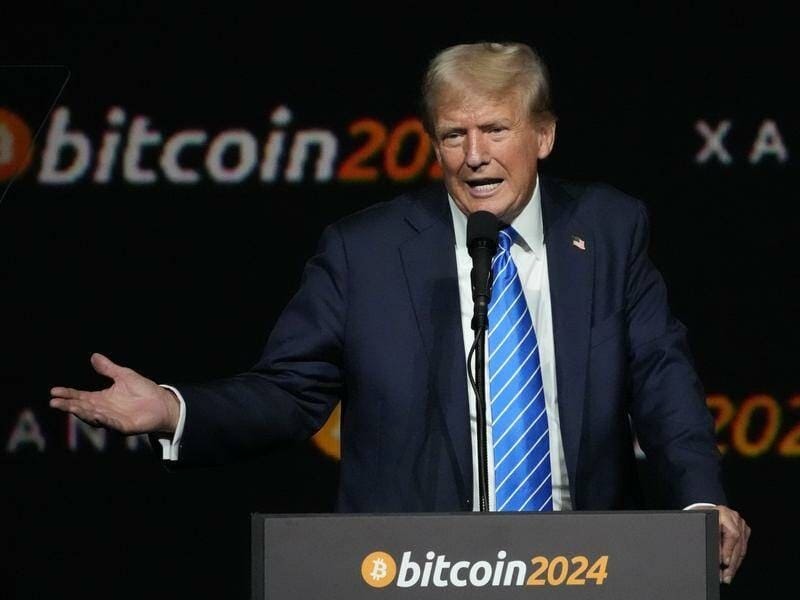
In January 2025, something happened that the crypto industry had been dreaming about and that its critics had been dreading for years. The President of the United States signed an executive order establishing a Strategic Bitcoin Reserve. It was a moment that rewrote the rules of the game overnight.
Not because Bitcoin needed the validation. By that point, BTC had already survived countless government crackdowns, regulatory panic, and media obituaries. But because sovereign ownership changes the conversation permanently. Once the world’s largest economy starts accumulating Bitcoin as a state asset, the asset class is no longer a speculative bet it is geopolitical infrastructure.
Now, heading deeper into 2026, the implications are still playing out across markets, governments, and portfolios. In this article, we break down what the Strategic Bitcoin Reserve actually is, how we arrived here, what it means for BTC price action, and what smart investors should be thinking about right now.
What Is the US Strategic Bitcoin Reserve?
The US Strategic Bitcoin Reserve is a government-held stockpile of Bitcoin, established via executive action and modelled loosely on the concept of the Strategic Petroleum Reserve the emergency oil stockpile the US has maintained since the 1970s. The difference, of course, is that Bitcoin does not power industrial supply chains. What it does do is serve as a non-sovereign, fixed-supply monetary asset that no government can inflate away.
The initial reserve was seeded primarily from Bitcoin already held by the federal government largely assets seized through law enforcement actions, including the Silk Road and Bitfinex hack forfeitures. Estimates put that figure at approximately 200,000 BTC, which at 2026 prices represents a holding worth well north of $18 billion.
Crucially, the executive order also signalled intent to expand the reserve over time meaning the US government is not just a passive holder, but a prospective buyer in the open market. That single sentence in the policy document sent shockwaves through every institutional trading desk on the planet.
How Did We Get Here? The Road to Sovereign BTC Adoption
The groundwork for the Strategic Bitcoin Reserve was laid across several years of converging forces. The approval of spot Bitcoin ETFs in the United States in early 2024 opened the floodgates for institutional capital. BlackRock, Fidelity, and a cohort of Wall Street giants began accumulating BTC on behalf of clients, normalising Bitcoin as a portfolio allocation in the same breath as commodities or Treasury bonds.
Simultaneously, the 2024 Bitcoin halving reduced the supply issuance rate to its lowest level in history. With demand rising and new supply tightening, the supply-demand mismatch became increasingly stark. By the time the executive order arrived, Bitcoin had already broken through $100,000 and was consolidating in the $90,000–$110,000 range.
The political shift was equally significant. A pro-crypto administration replaced years of regulatory hostility. The SEC’s approach to digital assets transformed from one of enforcement-first to engagement-first. David Sacks was appointed as the US AI and Crypto Czar. The message was clear: the United States intended to lead on digital assets rather than obstruct them.
When those threads came together institutional adoption, post-halving supply pressure, regulatory clarity, and political will the Strategic Bitcoin Reserve was not a surprise. It was an inevitability.
What Does the Bitcoin Reserve Mean for BTC Price in 2026?
The direct price impact of the Strategic Bitcoin Reserve operates on two levels: the immediate and the structural.
On the immediate level, the announcement itself removed a significant overhang from the market. One of the persistent bear arguments against Bitcoin had always been that the US government would eventually move to ban or heavily restrict it. The reserve does the opposite it enshrines Bitcoin as a legitimate state asset. That single shift in narrative unlocked a wave of institutional capital that had been sitting on the sidelines waiting for exactly this kind of political signal.
On the structural level, the implications are potentially far more powerful. If the US government becomes a consistent buyer even in small increments relative to the total market it creates a price floor effect. Government buyers are long-term holders by mandate. They do not panic sell during corrections. Every BTC absorbed into the reserve is supply permanently removed from circulation.
Beyond the US, the reserve has already triggered a competitive dynamic between nation-states. Countries that have historically been cautious about Bitcoin are now quietly modelling what a reserve accumulation strategy would look like on their own balance sheets. In a world where the dollar’s reserve currency status is being debated, holding non-sovereign hard assets gold, Bitcoin is increasingly seen as rational monetary policy.
The combination of post-halving supply dynamics, sustained institutional inflows through ETFs, and sovereign accumulation from multiple directions creates one of the most constructive supply-demand setups Bitcoin has ever seen heading into the latter half of 2026.
The Institutional Domino Effect: Who Follows Next?
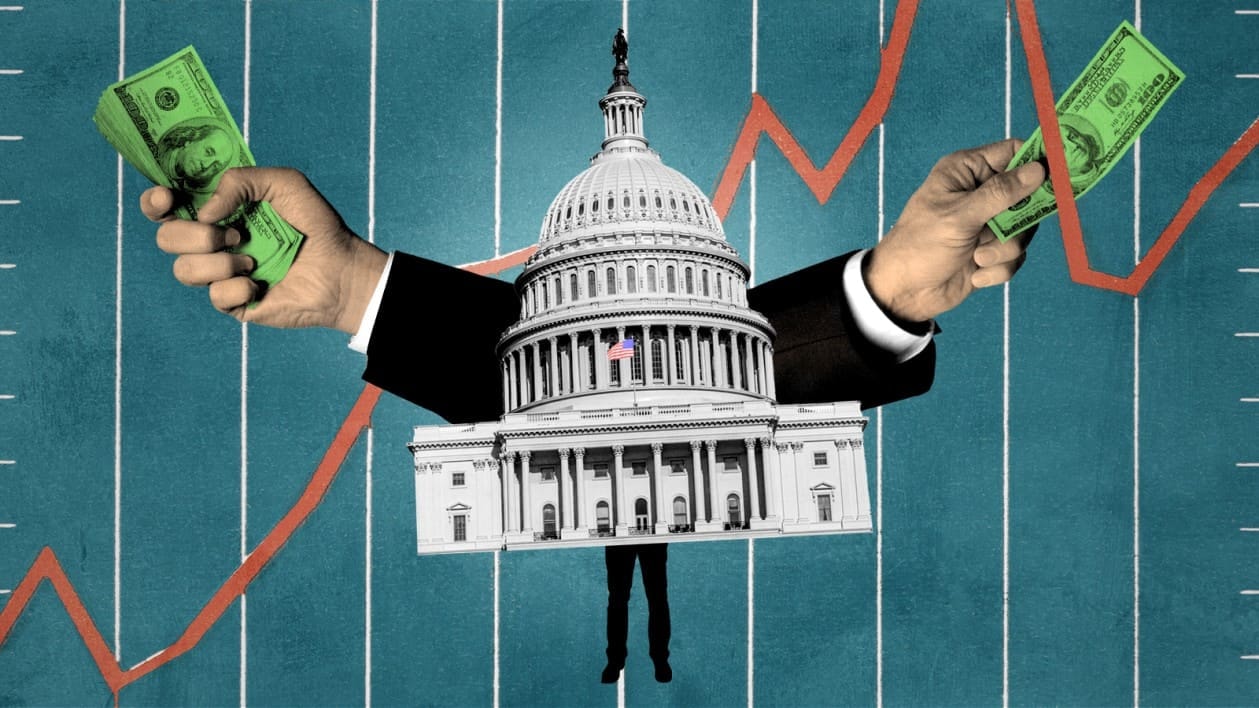
The United States establishing a Bitcoin reserve has had an immediate effect on how other large institutions think about Bitcoin allocation. The logic is straightforward: if the most powerful government on earth is treating Bitcoin as a reserve asset, the risk profile of not holding Bitcoin has materially changed.
Corporate treasuries were already moving in this direction. MicroStrategy now rebranded as Strategy had blazed the trail, demonstrating that a public company could hold Bitcoin as its primary treasury asset and see its stock price respond positively over a multi-year horizon. But the reserve changes the calculus for CFOs at more conservative organisations. The conversation in boardrooms has shifted from “why would we hold Bitcoin” to “what is the cost of not holding it.”
Sovereign wealth funds are another critical frontier. Norway’s Government Pension Fund one of the largest in the world has indirect Bitcoin exposure through equity holdings in companies like MicroStrategy. But direct BTC allocation from funds of that scale would represent a step-change in demand. The US reserve provides the political and institutional cover that makes such a move defensible to fund trustees and legislators alike.
Which Countries Could Announce Their Own Bitcoin Reserve?
The competitive geopolitics of Bitcoin reserves is one of the most important emerging dynamics in macro finance. Several countries are already positioned or motivated to follow the US lead.
El Salvador is the obvious pioneer. President Bukele’s government has been accumulating Bitcoin since 2021 and has reported significant unrealised gains on those holdings. Their experience provided a proof-of-concept for sovereign Bitcoin ownership that other nations could point to when making their own case internally.
Bhutan is a less-publicised but fascinating case. The Himalayan kingdom has been mining Bitcoin at scale using its abundant hydroelectric power, quietly building a sovereign BTC holding that relative to the size of its economy is one of the largest per-capita in the world. Bhutan has said virtually nothing publicly about this. The silence speaks volumes.
Looking further afield, countries facing currency instability, dollar sanctions, or significant capital outflow pressures have the strongest structural incentive. Argentina, with its history of currency crises, has a population that already holds Bitcoin at meaningful scale. The UAE, with its appetite for positioning Dubai as a global crypto hub, has both the financial firepower and the political will. Even within the G7, Japan and Germany have Bitcoin-friendly regulatory environments that could evolve toward strategic accumulation.
The key insight is that nation-state adoption is not linear it is competitive. Once two or three significant economies hold a strategic reserve, the cost of not holding one becomes a matter of national financial debate.

Risks and Criticisms: Not Everyone Is Convinced
No analysis of the Strategic Bitcoin Reserve would be complete without addressing the legitimate criticisms and there are several worth taking seriously.
The most pointed objection is the question of accountability and oversight. Unlike gold in Fort Knox or oil in the Strategic Petroleum Reserve, Bitcoin’s value is entirely market-driven with no industrial floor. Critics in Washington have argued that holding a volatile digital asset on the national balance sheet exposes taxpayers to unnecessary risk. This debate is far from settled and will intensify when, not if Bitcoin experiences its next significant drawdown.
There is also the question of executive versus legislative authority. The reserve was created by executive order, which means a future administration could, in theory, reverse or liquidate it without needing Congressional approval. The lack of legislative permanence is a genuine uncertainty that institutional long term holders will be factoring into their modelling.
Finally, there are those who argue that sovereign ownership fundamentally undermines Bitcoin’s core value proposition its independence from state control. If governments hold significant percentages of the circulating supply, they gain a degree of influence over market dynamics that sits awkwardly with the original cypherpunk vision. It is a philosophical tension that the crypto community will be wrestling with for years.
What the Strategic Bitcoin Reserve Means for Your Portfolio in 2026
For investors, the strategic question is not whether the Bitcoin reserve is good or bad policy. The question is: how do you position in a market where the demand floor has materially shifted upward?
A few things now appear structurally different in 2026 compared to any prior Bitcoin cycle. First, the downside volatility should be comparatively dampened. With sovereign buyers, ETF-based institutional flows, and corporate treasuries all acting as consistent accumulators during dips, the severity of drawdowns is likely to be less extreme than the 80% crashes seen in previous cycles. This does not mean volatility disappears, it means the floor is higher.
Second, the correlation between Bitcoin and risk assets like tech stocks is evolving. As BTC increasingly behaves like a reserve asset driven by sovereign and institutional flows rather than retail speculation, its correlation to macroeconomic sentiment may gradually resemble gold more than the Nasdaq. That changes how it fits into a diversified portfolio allocation framework.
Third, the reserve provides a long-term narrative anchor for Bitcoin that no prior cycle has had. In 2017, it was retail mania. In 2020, it was institutional discovery. In 2024, it was ETF legitimacy. In 2026, it is sovereign adoption. Each cycle has built on the last, and the narrative arc continues to strengthen.
The appropriate allocation remains a function of individual risk tolerance and portfolio objectives. But the asymmetric upside argument for Bitcoin at any point in its history has never been stronger than it is right now.
The Bottom Line
The US Strategic Bitcoin Reserve is not just a policy decision, it is a geopolitical signal that reverberates across every financial market in the world. It validates Bitcoin as an asset class at the highest possible level, accelerates the competitive pressure on other nations and institutions to develop their own strategies, and fundamentally shifts the supply-demand equation for BTC in 2026 and beyond.
The risks are real and should not be dismissed, volatility, political reversibility, and the philosophical questions about sovereign Bitcoin ownership are all legitimate concerns. But for investors looking at the next three to five years, the macro tailwinds behind Bitcoin have never been more aligned.
The question is no longer whether Bitcoin belongs in serious portfolios. The question is how much and whether you want to be positioned before the next wave of sovereign buyers makes that decision for you.